
By Zach Collier
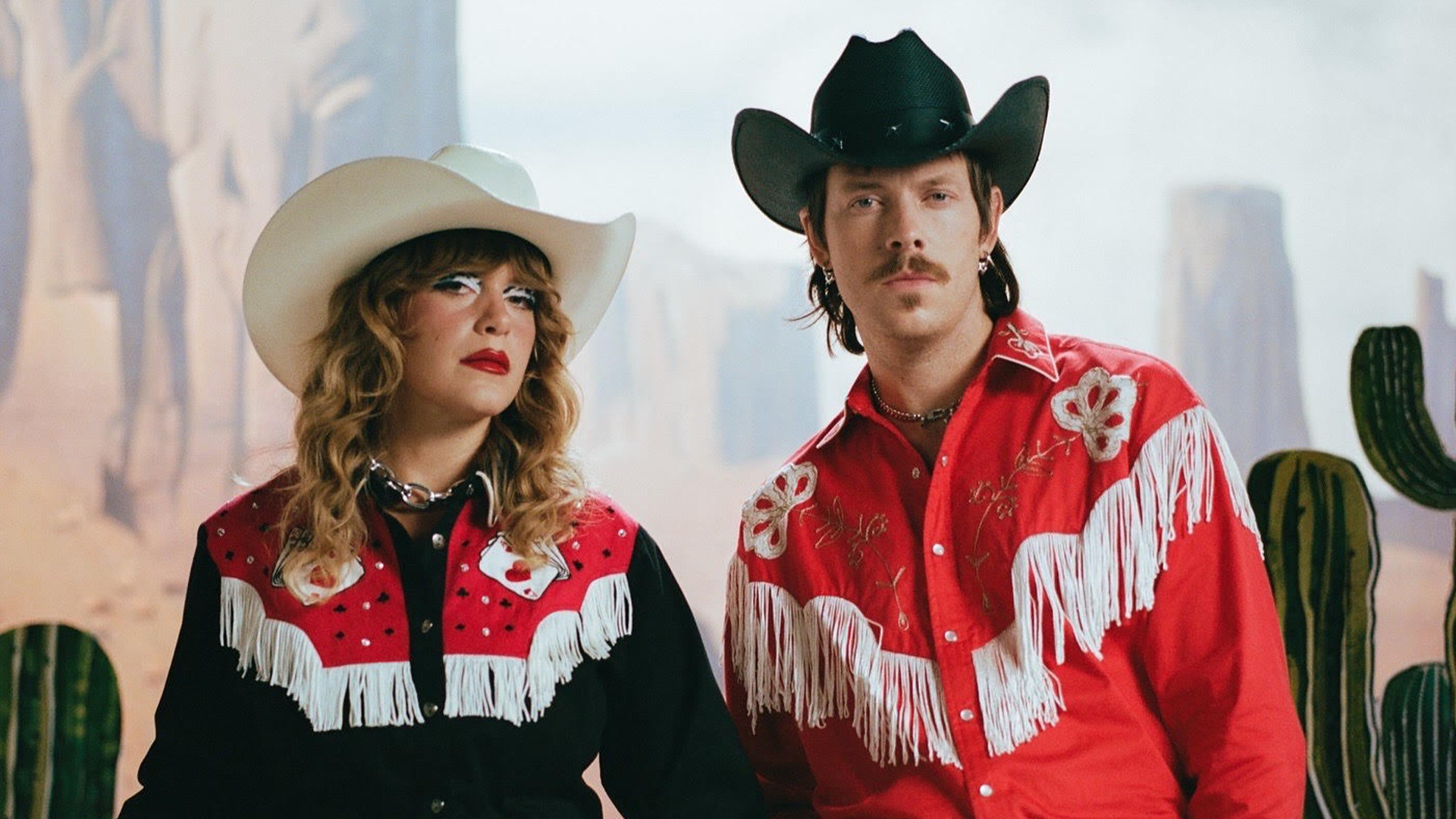
LaFrantz is an indie music duo from California consisting of husband and wife Meg and Jack Larsen. The two are a prime example of the unpredictable and risky path of pursuing one’s dreams.
Despite their cowboy-inspired appearance with hats, boots, and the whole nine years, they want to make it abundantly clear that they are not a “cowboy band.” Instead, their debut single “RATTLESNAKE” showcases their unique genre-defying style, blending traditional Western sounds with meta-pop elements that transcend musical conventions. The song’s central refrain, “You don’t wanna dance with a rattlesnake,” serves as both a warning and an invitation. On the one hand, the song is so infectious that you can’t help but move. On the other hand, the lyrics prove LaFrantz is scrappy and tenacious and can definitely take down any challenge no matter the odds.
Before finding their current industry success, Meg and Jack’s music career was far from smooth sailing. They initially formed a band called Westward the Tide in Provo. Despite achieving millions of streams, their bassist’s relocation to New York and other band members’ different career paths led to the band’s dissolution (and even led to their drummer joining The National Parks).

Meg and Jack were still laser-focused on making music for a living, so they decided to take a leap of faith and move to Los Angeles. They had no connections and little money, but through persistence and determination, they found a spot in the city and began building their future.
The early years in Los Angeles were a struggle for the duo. They took on multiple jobs to survive, including working as Uber Eats drivers and taking on odd jobs like electric scooter charging. Jack worked as a graphic designer while Meg managed a coffee shop and later worked as a nanny. Despite their success in Utah, LA’s competitive nature and high living costs quickly drained their finances, and their creativity began to suffer under the weight of stress and survival. Meg in particular saw how the grind of survival took a toll on their artistic drive, making them feel disconnected from their dreams.
“When they say LA is a city that will make you or break you, that is so true,” says Meg. “I feel like we came out here with stars in our eyes. Like, oh, we have success with our band in Utah and we can just like transfer over to LA and just keep the train rolling. That was not our experience at all.”

A turning point came for Jack when he was hit by a drunk driver in a serious car accident. The crash left them without a vehicle and compounded their already dire financial situation. During this difficult time, Jack reached out to longtime friend and manager, Coulter Reynolds, to explore songwriting opportunities. Although Jack had little to lose, he remained optimistic.
“I was like, dude, I don’t know what’s wrong or what I’m doing with my life, but I know I can write a song,” recalls Jack. “Just give me a shot.” He approached Coulter humbly, offering to be a second-string songwriter if necessary, and eventually got a chance to collaborate on a session when someone couldn’t make it. The song they worked on, “Still Something” by Suriel Hess, became a viral hit, marking the start of Jack’s songwriting career.
Despite Jack’s growing success, Meg struggled with feelings of isolation and frustration. While Jack pursued songwriting, Meg continued working multiple jobs to support them, feeling disconnected from her own creative aspirations. Jack encouraged her to trust the process, believing that if one of them found success, it would ultimately benefit them both. However, this period was emotionally difficult for Meg, as she had always dreamed of being a musician, and the uncertainty of not pursuing that dream weighed heavily on her.
One night when Jack was helping Meg nanny, Coulter called again. They were far away from home with no money and no car. “And he calls me and says, ‘I know that you don’t have money or anything, but we just had a writer drop out of the session in Costa Mesa, which is an hour away from you. I don’t know how you’ll get there, but I just thought to call you because of what you said to me. But I think that this artist will be worth your time. I think he’s going to be big one day,” says Jack.
Without hesitation, Meg said, “I got you. Go max out our credit card, rent a car, trust the universe, and just get out there.”
So he did. Jack drove an hour to the session, and that young, promising artist ended up being Benson Boone. You may have heard one of the songs they wrote together. It’s a little song called “Beautiful Things.”
From that point on, Jack transitioned into full-time songwriting. Jack’s success, however, was a glimmer of hope that eventually they could return to music as a duo.
As Jack’s songwriting career flourished, opportunities for Meg also began to materialize. A publisher expressed interest in both of them, leading to songwriting opportunities for TV and film. This allowed the couple to return to the studio and begin working on their own music again. With the support of their manager Coulter, Meg also began pursuing songwriting, and they both found new inspiration through their work in sync music. Without the pressure of commercial expectations, they were free to experiment with their sound and explore creative avenues they hadn’t considered before.

The culmination of their creative rebirth came with the writing of “RATTLESNAKE.” The song’s creation was spontaneous and organic, with Jack’s rhythmic tapping on his jeans sparking the initial groove. Producer Greg Hansen contributed a catchy guitar riff, and Meg’s lyrics flowed effortlessly, capturing the song’s essence in just a few takes. The writing process felt like a turning point for the couple, bringing them back to the music they loved and marking the beginning of a new phase in their career. With “RATTLESNAKE,” they embraced a sound that was authentically their own, free from the constraints of financial pressure.
Jack and Meg’s journey is a testament to resilience and perseverance in the face of adversity. Throughout their struggles—whether financial, emotional, or creative—they never gave up on each other or their dreams. Reflecting on their journey, Jack says, “Don’t stress. Period. End of story. If you’re working hard, if you’re making good art, if you keep your head down and you keep doing that, people will find you and people will come.”

“You cannot give up, especially in those times where you feel like nothing is working,” says Meg. “I know it sounds so cliche. But the only reason why people don’t make it is because they quit. So even in those dark, dark times when Jack and I were struggling and had no money and no car, walking to the grocery store and bringing home armloads of groceries on foot, those were the times we knew we couldn’t quit. You have to have unwavering confidence and positivity. Believe in the outcome even if you can’t see how you’re going to get there.”
Their story is a reminder that while the path to success may be fraught with difficulties, unwavering confidence, positivity, and hard work can ultimately lead to fulfillment and achievement, no matter how daunting the journey may seem.
“You have to have a little bit of delusion,” says Meg. “But with unwavering positivity and hard work, you can’t fail. Tomorrow could be an amazing experience or your last day on earth. So live presently.”
Make sure to follow LaFrantz on Instagram. You can watch the official music video for their debut single, “RATTLESNAKE,” below!