
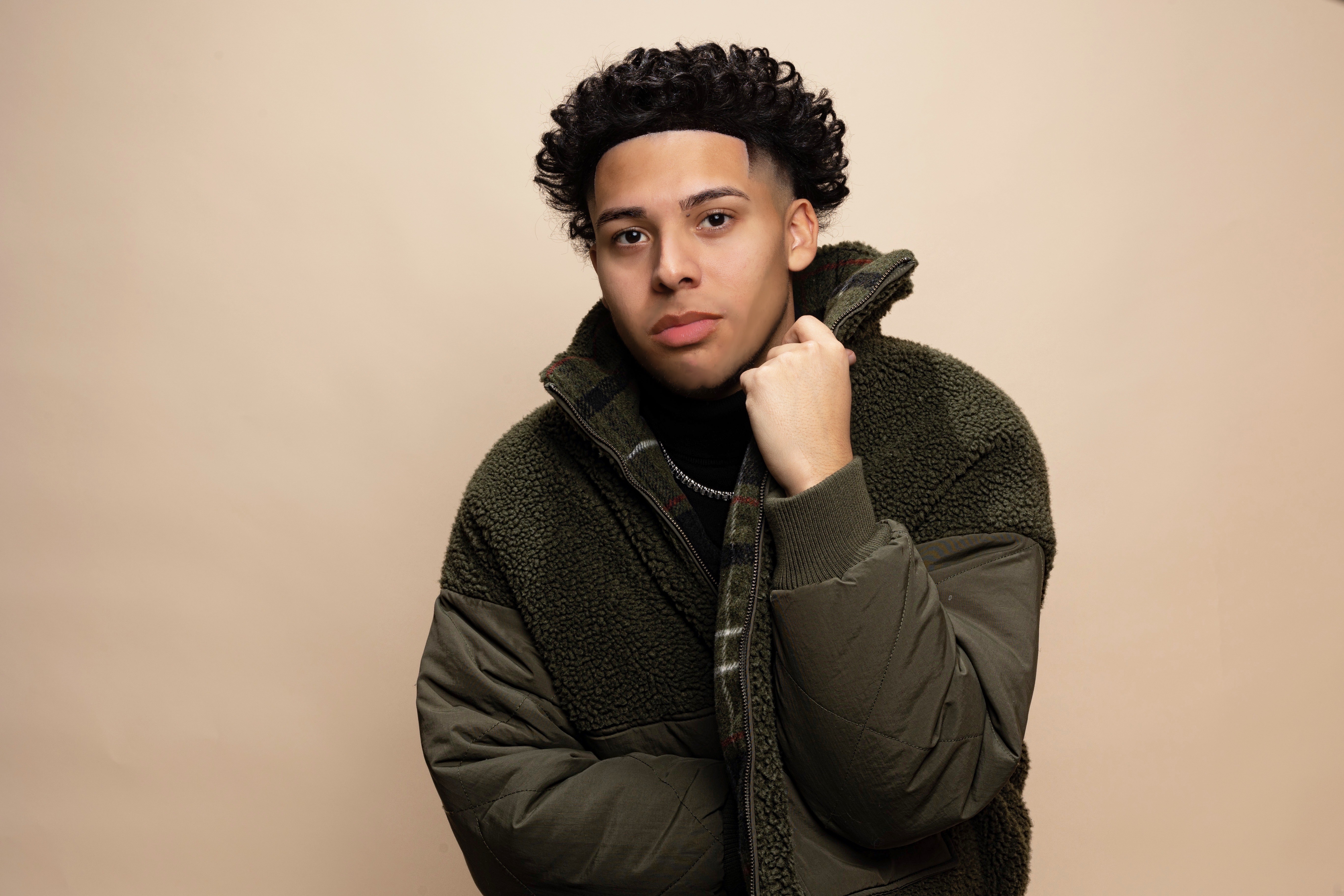
By Zach Collier
There’s a moment in every emerging artist’s career where someone somewhere in “the industry” tries to hand them a costume. Sometimes it’s to cover a quirk they dislike. Sometimes it’s because of a geography problem.
“You’re great, but could you pretend you’re from somewhere else?”
For Enzo Dennet, that moment came when a major label asked him to present himself as “more gangster” and to quietly distance himself from Utah. The implication was clear: the music was promising, but the image was the problem. Utah simply didn’t fit the story they knew how to sell.
“Listen, I kind of understand it,” he tells me. “In a lot of ways, taking a chance on a rapper that looks like me and comes from Utah is somewhat of a hard sell. It makes sense why they would want to attach an artist to a movement and an image that is proven to work.”

Just because Enzo understood didn’t mean he was going to comply. Enzo – a 25-year-old Utah-raised artist of Black and Honduran descent – didn’t have an easy upbringing. But it’s not something he wants to exploit, and he doesn’t want to warp the true, precious parts of his life to fit a stereotype. He didn’t want to cosplay a narrative to earn attention.
“My mom worked three jobs at a time, and I would help her clean bathrooms at one of them for extra cash. I’ve been surrounded by a lot of things, and I’ve been lucky to come out on this side unscathed,” he says. “But she taught me that the goal is always to progress and push boundaries. So just because I conduct myself a certain way or speak a certain way, that doesn’t mean that my past wasn’t real.”
That comment sticks with me. Enzo’s past was something they wanted to mine, but how he turned out didn’t match their prescribed narrative.
“If a label doesn’t understand my brand and share that vision with me,” he says, “Then it’s hard to envision a future with them.”
So he turned the deal down.

Within the industry, Utah is a weird place. It’s a strange sendup of intensely prevalent national stereotypes (babyfaced Mormon dummies a la The Book of Mormon musical; soaking and bed-jumping; YouTube documentary exposés about MLMs) while still being deeply shrouded in mystery. Despite these stereotypes, nobody on the outside really knows what goes on here – but they’re deeply curious.
That pressure can make Utah a place artists want to leave rather than represent. But Enzo isn’t interested in leaving.
“There’s this joke that people from Utah always talk about moving away but never do,” he says. “And I think that’s because, in reality, it’s a great place.”
He describes Utah with a specificity that only comes from living in it. A blend of cultures and religions. A state that’s not too big and not too small. Influenced by everywhere, but not reducible to anywhere else.

“I wish people on the outside understood that Utah is more than just a Mormon state,” he says. “That’s a unique and beautiful part of it, but there’s so much more from a cultural and musical standpoint that we offer but we haven’t really been given a commercial platform to showcase.”
Enzo discusses Post Malone as a great ambassador in that sense. He’s brought a lot of positive attention to Utah. But Enzo’s aiming for something different.
“I think it would be amazing if someone who actually grew up here was in that position.”
What makes the growing momentum around Enzo’s music particularly strange (and particularly compelling) is where it’s happening. His music is finding traction in places that have no obligation to care about Utah. Like, at all.
Scandinavia. Nigeria. Mexico.
“Smooth Operator” caught playlist attention in Mexico after a DJ started spinning it. His track “Slower,” made with collaborator Moxko, is receiving play in Moxko’s home country of Nigeria. “Where The Huzz At” has had Scandinavian users using it for memes.
After mega-influencer Sommer Ray used Enzo’s song “Big Sass” on TikTok, the rapper was briefly introduced to a new audience before the platform banned the track. Despite the setback, his single is still on pace to reach one million streams without a featured artist. This is an impressive milestone for a Utah rapper.
“It’s just bonkers to me,” Enzo laughs.
He credits much of that reach to his collaborators (producers Chris Nito and Doitjustis) who encouraged him to lean into melody, even when his instincts pulled him toward pure bars.
“I’m very much a purist at heart,” he admits. “I always just want to bar out on songs. But leaning into different sounds has allowed us to expand. We’ve been blessed to have some success in that way.”

He adds honestly: “A lot of it is luck, but the common denominator in all of these songs is the melodic factor that seems to break through cultural and language barriers.”
Despite the growing numbers and viral moments, he wants to continue to represent where he’s from.
“When I think of Utah,” he says, “I think of long winters and cold nights. Drives on I-80 and I-15. Snow plows and small towns.”
He wants that landscape to inform the sound of Utah hip hop instead of California mimicry or TikTok trend-chasing. He wants the music to be something shaped by environment and experience.
“I think us having our own identity is the only way we’ll be able to stamp ourselves as something serious. I hope that we can cultivate that, and I hope that I (or whoever has the opportunity) can embrace the up-and-comers that are molding that sound and bring it to the forefront the way Jay did for New York, or the way Pac did for LA, you know?”
So this is Enzo: an artist building the throne of Utah hip hop before he claims it, turning down deals that require him to erase himself.
His upcoming project, “It’s Not You, It’s Me,” arrives April 26, 2026. Make sure to follow Enzo on TikTok and Instagram. Check out his song “Smooth Operator” below.