
By Madeline Harris
The first thing I noticed about MELŌ’s recent EP HiLo is that it is 42 minutes long. What does this mean? It means it must be of utmost significance per Hitchhiker’s Guide to the Galaxy’s answer to the ultimate question. Seeing this number, I knew I needed to dive deeper into HiLo. It’s a dense, thought-provoking album that displays various elements of prog rock influence, all the while being adorned by complex classical arrangements and borderline theatrical storytelling. So, yeah, you can say I hit the jackpot.
I was fortunate enough to get to chat with the band: Zakkary Hale, Jordan Davis, and Mikey Collard. We focused on the origins, motivations, and genesis of HiLo and narrowed in on some of its distinctive details (working with The Budapest Scoring Orchestra, for example.)

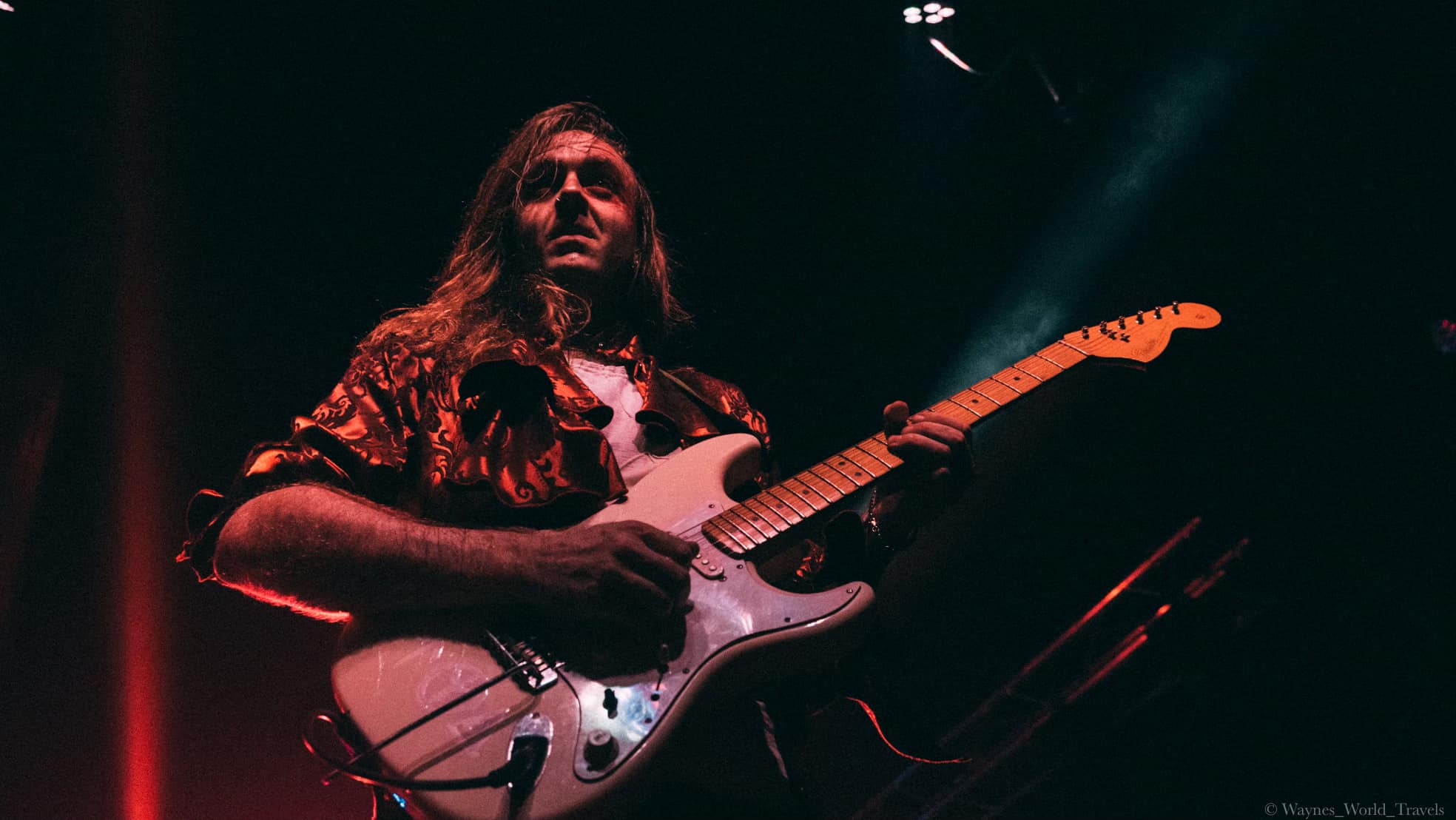
MELŌ was formed by former Melodramus members when they all happened to relocate back to Utah around the Pandemic. Over the course of the next few years, they’d release several singles, each rich with complex rhythms, intense subject matter, and jarringly immersive narration. They’ve nailed elements of what I would consider “their sound” – intricate layering, striking sound production, and catchy, complicated riffs, melodies.
A couple of years ago, the idea of compiling several of these singles into a cohesive concept-EP was born. What followed was the process of stitching the ideas together. Davis notes that the common theme among the songs was their exploring the highs or the lows of life and expressing these in powerful ways. Songs such as “HiLo” and “Tyranny,” for example, are boiling over with intense, emotional urgency. The lyrics of these more passionate songs work symbiotically with the album’s grand scale. Other songs like “The Gift” place priority on captivating storytelling and communicating ideas with clarity. But even in the EP’s most mellow sections, it is still deeply rooted in precise musical expertise and focuses on creating a larger-than-life listening experience. Hale’s vocal delivery is cinematic in every song and feels very much like it’s filled with fire. MELŌ’s members blend their classical backgrounds and prog rock tastes to produce a sound that “lends way for,” as Davis puts it, the orchestral embellishments that distinguish HiLo’s sound.

When the band decided to pursue this direction, they landed on working with the Budapest Scoring Orchestra per the recommendation of established audio engineer Gavin McMahan. McMahan pitched the idea of including instrumental interludes to cohesively bridge songs and give the EP an atmosphere to hold fast to. Davis, who had the initial grand-scale vision for HiLo and was driving the orchestral effort notes that since they would already be spending the money to make it happen, they may as well “go all the way.” With this mindset established, McMahan got to work composing classical arrangements for the whole EP. The band buzzed about his ability and willingness to handwrite the entire score within a matter of a couple weeks.
All members of the band mention Silverchair’s 2002 album Diorama as a strong influence on their prismatic and sometimes perplexing sound. Hale describes it as “colored over with symphonic arrangements,” which is exactly how I myself would describe HiLo. In their EP, MELŌ takes grunge and alt rock seeds and complexifies them, imbuing them with theatrical vocals and blaring, rock-opera guitar. From this already-epic baseline, the music continues to soar with the force of the orchestral additions.

“The album speaks, musically and lyrically, to the highs and lows, the ups and downs of life. This dictated the order of the songs,” Davis notes, as the album’s intentional order is set to achieve a sort of “yin-yang” balance. Something to notice, too, about the album is that the interludes have titles such as “^,” “E,” “V,” “I,” and “L,” in that descending order. But after talking to Davis, one understands that this word’s inverse, “LIVE,” is just as intentional an inclusion. The idea is that, when descending, you are met with the word evil and a metaphorical, philosophical, and spiritual low. On the flip hand, you “live” when ascending, and the “^” is the band’s reminder of God and His goodness.
These themes and similar ones are recurring on the album, and come to a head in “The Gift.” Hale describes the creative process behind the song, noting that he first wrote the lyrics at the age of 16. After decades of them being forgotten, he rediscovered them in alignment with his rebuilding a relationship with Christ, as he puts it. This idea of upwards trajectories is perhaps the glue of HiLo in its entirety, and the band kept on circling back to navigating trials with resilience as a preeminent theme.

Looking back, the band often thinks: did we actually do that?!
And the answer is yes. They did. And they credit this accomplishment to the philosophy of tackling challenges one step at a time. Davis says to “put your mind to it” and one day the impossible will become possible. HiLo stands as an example of this.
Keep up with MELŌ by following them on Instagram and check out my favorite MELŌ song “Jazz Odyssey” below!