
By Scott Knutson
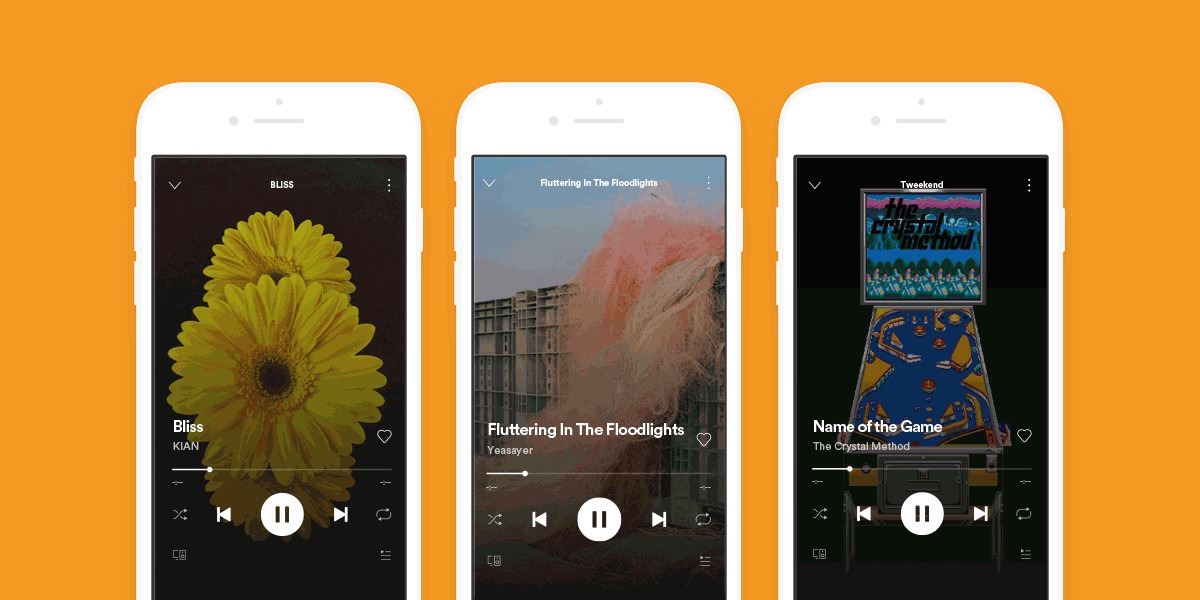
If you’re a local band releasing music on Spotify, you’ve probably dabbled with Spotify Canvases – those looping eight-second visual snippets that play alongside your track. And while they’re a small detail in the grand scheme of your release, they matter. A lot.
Unfortunately, many artists fall into the same two traps that turn a canvas from a compelling visual companion into something distracting or even off-putting. After watching dozens of canvases from bands right here in our scene, I’ve noticed the patterns and gathered some fantastic examples of what to do instead.
I couldn’t really think of a good way to demonstrate this without showing some bad examples. So if you are a band watching this and you’re one of the not so good examples, I’m sorry. No offense. But please know: by virtue of the fact that these bands made it into this video, I really like their music. So please go support them.
Tracks have been embedded here to help the artist, with footage of the canvas included in our Instagram video.
Let’s break this down.
Mistake #1: Dropping in Live Footage That Doesn’t Match the Music
We see this constantly: a band tosses a clip from their last show into the canvas slot and calls it good. But if the motion of the visuals doesn’t sync with the song, this can hurt your listener’s brain.
Take Cardinal Bloom, a local band I love. In one case, they used foggy, flashy live footage for a track with a very different vibe. The video looked cool, but it didn’t match the emotion or timing of the song at all. The result? A disconnect that makes the listening experience feel… wrong.
Another canvas from the same band used studio footage. Charming? Absolutely. Effective? Not really. Studio clips tend to feel sterile and rarely enhance a song unless the song itself has that behind-the-scenes, documentary-style energy.
But here’s the twist: Cardinal Bloom also provided a great counterexample with “So Sweet.” A simple clip, edited with warm, nostalgic film tones, synced beautifully with the atmosphere of the track. Proof that thoughtful editing can elevate even minimal footage.
The lesson: If the video doesn’t match the sound, it distracts the listener and can make the canvas feel strange.
Mistake #2: Using Random Clips That Don’t Fit the Song’s Emotional Tone
The second pitfall is choosing a clip (whether from a music video or a phone camera roll) that has nothing to do with how the song feels.
Take “Beautiful Couch” by The Moth & the Flame. Great song. But the canvas? A hallway shot likely from a music video that doesn’t add anything to the emotional landscape of the track.
Another musician, whose work I adore, had one of her canvases show a funny, cute moment with a friend. Charming on its own, sure. But the tone didn’t align with the song, and for the listener (who doesn’t know the friend), the video felt out of place.
Remember: a canvas is an emotional bridge. If the feeling of the clip doesn’t reflect the feeling of the music, that bridge collapses.
So what should you do instead? Here are two strategies that work.
1. Pair the Song With Footage That Matches Its Energy
This seems obvious, but when done well, it’s incredibly effective.
Indigo Waves offered a creative twist on this idea. Their album Mirror uses – you guessed it – mirrors in every canvas. Different locations, different visuals, same thematic thread. It’s simple, cohesive, and aesthetically beautiful.
2. Enhance Your Album Artwork Instead of Competing With It
This might be the most underrated strategy (and arguably the best).
Your album artwork is already designed to represent your music. Why not build on it?
Jackie St. Jackie did this brilliantly by simply animating their EP cover to slowly spin like a record. It adds texture and movement without distracting from the design itself.
Michael Barrow & the Tourists used a similar approach, with a background resembling a vinyl spinning underneath the cover art. It’s cohesive, intentional, and preserves the visual identity of the album.
Sunfish took their artwork and animated the turning of illustrated pages. Subtle, elegant, and visually satisfying.
But the standout example? Sun Sleeper. Their canvas features the same model and setting as their album art – either by filming during the photoshoot or recreating the scene with animation. It captures a serene, gentle moment that perfectly matches the energy of the music. It doesn’t distract. It enhances.
That’s the whole point.
The Core Principle
At the end of the day, a Spotify canvas isn’t about showing off your footage. It’s about deepening the emotional connection between listener and song.
A good canvas:
- Matches the tone
- Enhances the mood
- Supports the artwork
- Never distracts
A bad canvas pulls the listener out of the moment.
So choose carefully. Be intentional. Approach it the same way you would any other artistic decision in your music.
And above all, keep supporting and listening to local music.